What it means
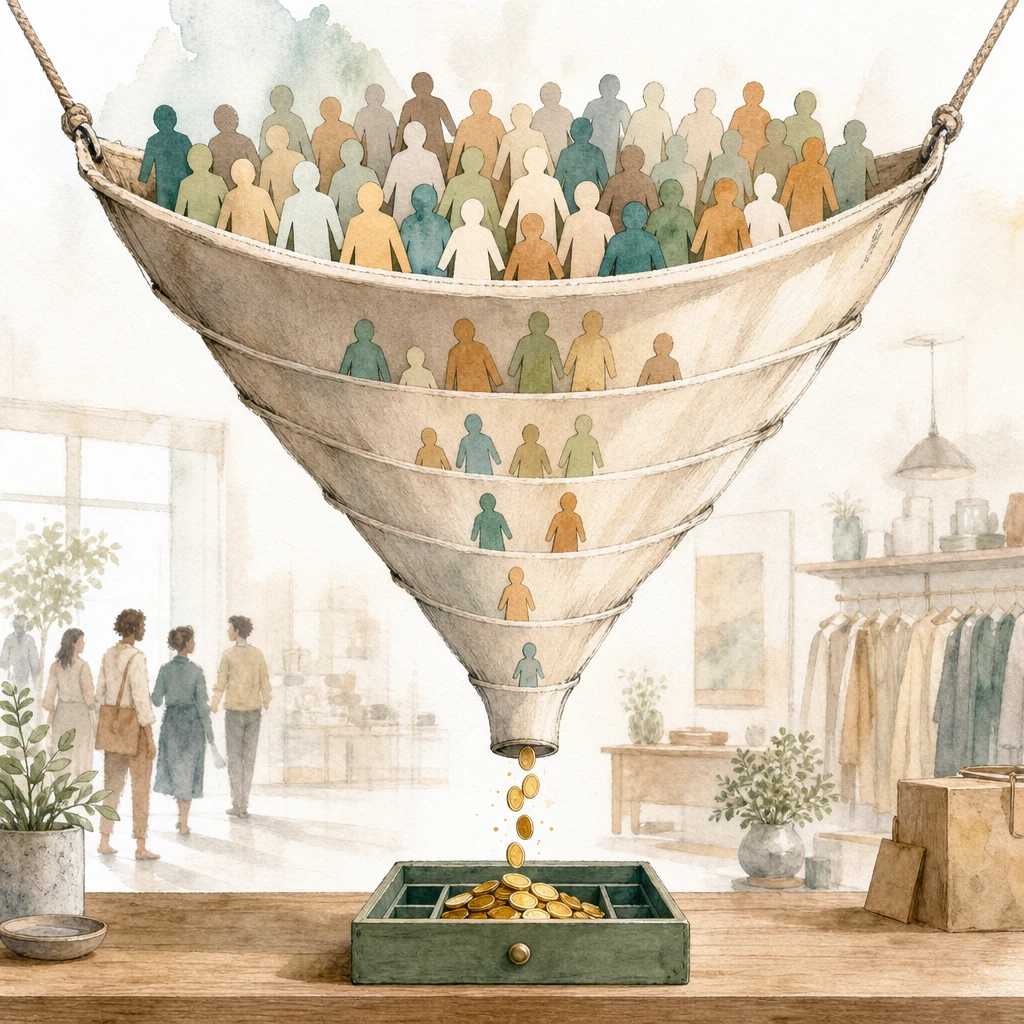
A funnel models the customer journey as a series of sequential stages, each with its own conversion rate to the next. The classic marketing funnel: Awareness (someone learns the brand exists), Interest (they engage with content), Consideration (they evaluate the offer), Intent (they ask for a quote), Conversion (they buy), Retention (they buy again).
Different businesses have funnels of different lengths. An e-commerce funnel might be 3 stages (visit, add-to-cart, purchase). A B2B funnel might be 7 stages (impression, click, lead, qualified, opportunity, proposal, close). The structure is the same: volume in at the top, fewer at each subsequent stage.
Why it matters
The funnel is the most useful diagnostic tool in growth. If conversions are weak, the funnel tells you exactly which stage is the bottleneck. Doubling traffic at the top is wasted if the qualified-to-booking step is the bleeding stage.
WhatsApp and AI agents specifically tend to fix the middle and bottom of the funnel: the slow-reply, lost-context, no-follow-up stages where most leads fall out. That is why CTWA plus AI-agent setups consistently raise overall conversion rate without raising top-of-funnel spend.
Example
A car detailing studio's funnel: 100,000 ad impressions a month, 2,000 clicks, 1,500 CTWA conversations started, 600 qualified by the AI agent, 180 booked, 130 actually showed up. Stage-to-stage conversion rates: 2 percent, 75 percent, 40 percent, 30 percent, 72 percent. The qualified-to-booked step is the weakest. That is where they focus optimisation, not the top-of-funnel ad spend.