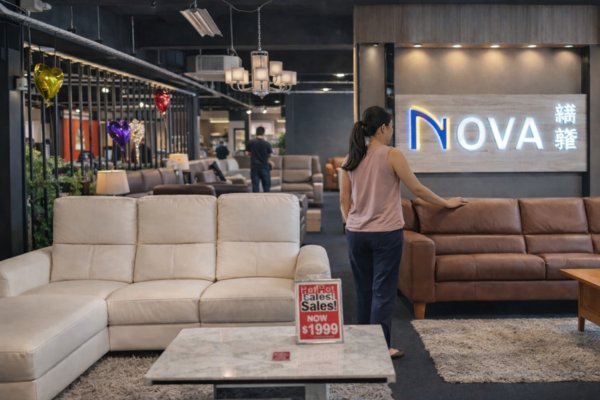
Nova Furnishing is a multi-showroom furniture retailer that has become one of the more recognisable names in Singapore's home and living scene. Their five showrooms span sofas, beds, dining sets, storage, and the all-in-one home packages that have made them a go-to destination for new homeowners moving into a fresh unit.
The range is deliberately broad. A customer might walk in for a single statement piece or commission an entire five-room fit-out. Either way, the conversation that turns a showroom visit into a delivered home stretches across weeks, not minutes, and crosses multiple channels in the process.
Buyers at Nova tend to plan. They take photos, save Instagram posts, return for second viewings with their partner, ask about lead times, request fabric swatches, and circle back with measurement questions late at night after their renovation contractor sends a layout update. The brand's reputation rides on being responsive across every one of those touchpoints, not just the showroom floor.
Layered on top of the sale is a substantial post-purchase relationship. Delivery scheduling, assembly, follow-up issues and review requests all live in the same channels customers used to ask their first product question. Nova needed a system that treated those touchpoints as part of one continuous conversation rather than as separate departments.

A typical Nova buying cycle for a sofa or a five-room package involves dozens of messages stretched over weeks, often across two or three of the brand's channels. A customer might start in Instagram DMs, move to WhatsApp once a price is on the table, and finish on email when the warranty paperwork lands. Threads were quietly going missing in the gaps between those channels.
The biggest of those gaps was time-of-day. Showrooms are busy on weekends and Nova's customers naturally browse, message and book follow-ups in evenings and on Saturdays. The office-hours team would then arrive on Monday to a queue of conversations that had grown cold over the previous 36 hours, often after the customer had already walked into a competitor's showroom.
Delivery windows and stock questions were the single largest source of repetitive admin. Customers asking 'when is mine arriving', 'can I push the delivery by a week', or 'is this still in stock in fabric three' generated an unrelenting flow of identical replies, and each one pulled a salesperson away from a live consultation.
Post-delivery review requests were a stated priority but in practice depended on someone in the warehouse remembering to send them after the truck got back. Some weeks were strong, others were silent. The pattern was leaving high-quality reviews on the table at exactly the moment when a customer was most likely to leave one.
The team felt the strain across the board. Every channel had a different inbox, every showroom had its own preferred reply pattern, and the people best at consultative selling were spending half their week answering the same five admin questions.
We deployed a team of AI agents across WhatsApp, Facebook, Instagram and the website chat, with email handoff for longer threads. The architecture was deliberately built around Nova's reality of one customer journey across many channels, not many separate conversations on each one.
A Showroom Enquiry Agent runs the front line. It answers first-touch product, pricing and availability questions, identifies the customer's room, room layout and budget bracket, and routes interested buyers to the closest of Nova's five showrooms with a recommended appointment slot.
A Package Specialist takes over the moment a buyer starts asking about all-in-one home bundles. It assembles room-by-room combinations from Nova's catalogue, applies the relevant package pricing, flags lead times where they matter, and frames the trade-offs (more storage versus larger sofa, for example) in language a first-time homeowner can actually act on.
A Delivery Coordinator owns everything after the order is placed. It confirms windows, handles reschedules when a renovation gets delayed, and updates customers as items move from warehouse to truck to door. By the time delivery happens, the customer already knows the day, the slot, the team's contact number and what to do if something is missing.
A Review Agent closes the loop automatically. The instant a delivery is marked complete in Nova's system, it sends a personalised request asking for a Google review. Because the request arrives while the customer is still admiring the new piece in their living room, the conversion rate on those asks is dramatically higher than a delayed manual chase.
Underneath all of this, the AI team shares a single source of customer state. A showroom visit two weeks ago is visible to the agent answering today's delivery question. A WhatsApp thread can pick up in the website chat without the customer having to repeat themselves.
Humans take over the moment a thread genuinely needs them: bespoke pricing for a large package, a specific contractor coordination issue, or any complaint that touches on quality. The handoff carries full conversation context, so the salesperson lands in the thread already up to speed.

Our Google reviews doubled in two weeks. Customers were happy to leave a review when the request came right after their delivery.Julian Lim · CEO
Reviews now arrive consistently right after delivery rather than weeks later. The review velocity that used to spike around individual heroic weeks has flattened into a reliable, ongoing flow that materially lifted Nova's count in their first months on the system.
Sales staff have visibility into every channel from one inbox. The threads that used to fall into the gaps between weekend showroom shifts and weekday office hours now flow predictably, and the team has stopped losing high-intent buyers to slow replies.
The repetitive admin layer is largely gone from human shoulders. Salespeople spend their time on consultations and large package deals instead of typing the same delivery-status answer for the fifteenth time that morning.
The team has been able to take on more enquiries without adding more headcount. The brand's response speed now matches the size of its showroom footprint, which is exactly the standard a first-time homeowner expects when they are about to spend five figures on furnishing a flat.
For Nova specifically, this means the patience-and-persistence selling that makes the brand work is no longer rationed by inbox volume. Every buyer gets the experience the brand was built around, no matter how many other conversations are happening at the same time.
Figures reflect the trailing 90 days against an internal baseline. Conversion lifts measured against the pre-deployment quarter.
Agents check live Shopify inventory across all five showrooms in a single read, then book the right delivery slot from the dispatch calendar without transferring the customer between branches.
We design the team, train it on your products and tone, deploy it across the channels your customers actually use, and stay on as the operator.