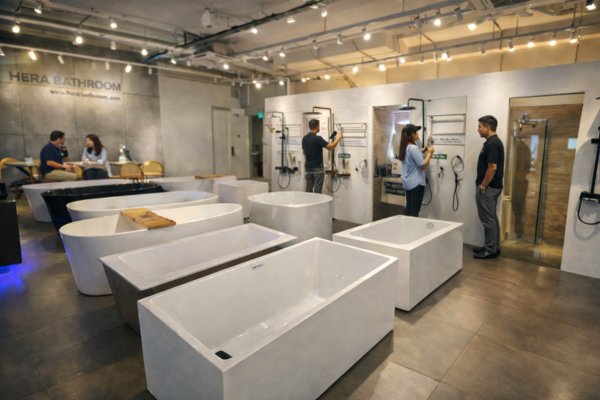
Hera Bathroom came to us with a single, recognisable problem: a WhatsApp inbox so busy that the team was spending roughly half of every day qualifying enquiries instead of selling. We started by rebuilding their messaging setup around a team of specialist AI agents, then, over several months, expanded into building their first CRM, wiring up a quotation pipeline, replacing paper forms, and eventually taking over their paid media and a chunk of their web and SEO work.
This is a working account of that engagement, including the parts that did not go smoothly. The honest version is more useful than a glossy one: a deployment at this scale is won in the tuning, and the record of real issues and fixes is what shows the system is operated, not just installed.
Hera Bathroom is a Singapore showroom-led retailer specialising in bathtubs, vanity cabinets, mirror cabinets and matching bathroom fittings. Customers walk in, or message in, to choose freestanding tubs, vanity sets and bundle packages, often with parallel questions about sizing for an HDB or condo unit, finishes, lead times and stock for an upcoming BTO collection. Hera does not take on renovation work itself: the product is the product, and installation is offered as a service around it.
The customer base spans three quite different audiences who often look identical on a first message: homeowners buying for their own bathroom, interior designers and trade partners working through Hera's ID programme, and BTO buyers who cluster around estate-specific Telegram group-buy chats during HDB collection windows. Each wants a different conversation, a different level of detail and a different commercial treatment.
The showroom is the conversion anchor for almost every meaningful purchase. Buyers want to see the bathtub in person, sit at the vanity and compare finishes under real light, so a booked, scoped showroom appointment is one of the most valuable outcomes the team can produce. The flip side is that unscoped "come and look" visits burn showroom time that should have been spent selling.
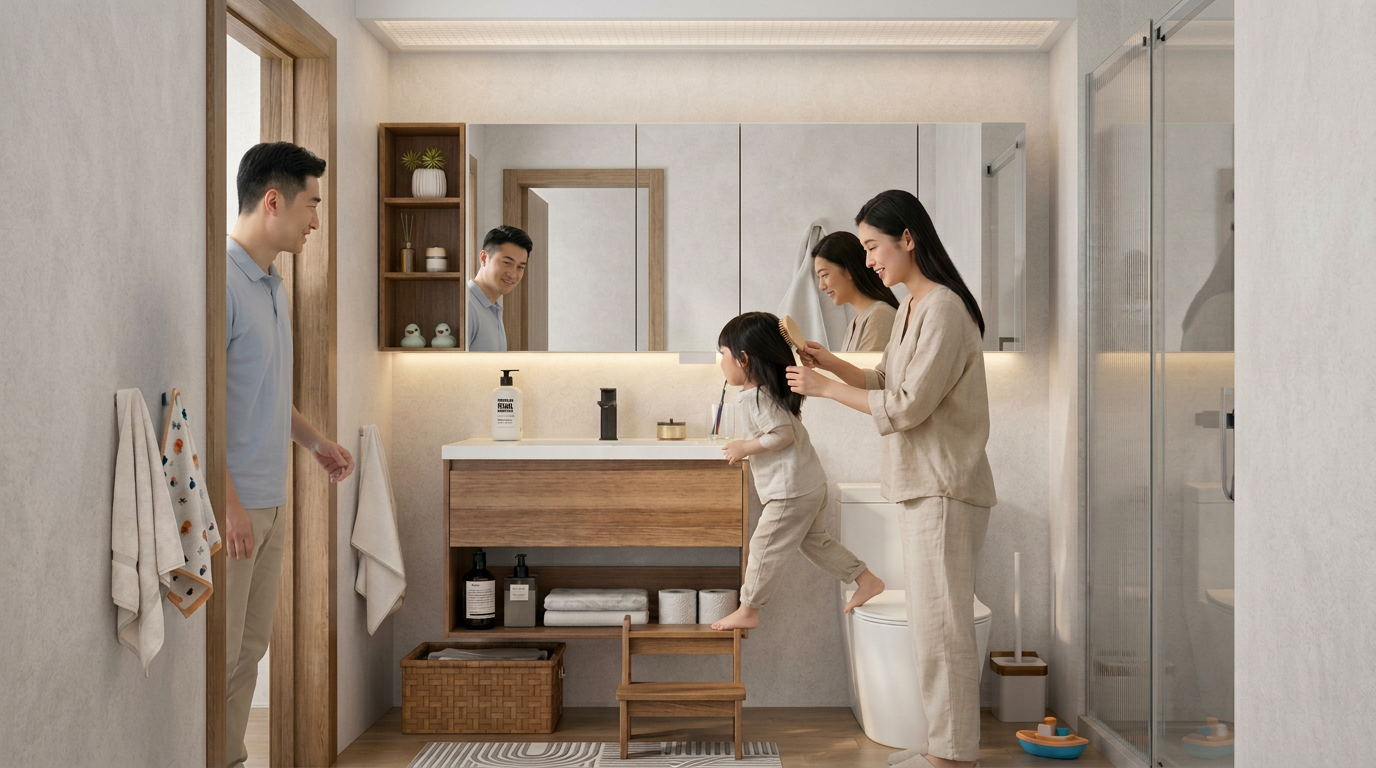
Enquiries arrived from very different lanes that looked the same at first glance. A homeowner pricing a single bathtub looked like a designer scoping ten units, which looked like a BTO buyer asking about the bundle, which looked like someone with a two-year-old warranty question. The team had no fast way to tell these apart without reading every thread in full.
The people best placed to close were therefore spending their day filtering and repeating themselves: the same vanity-versus-vanity comparison, the same dimension answers, the same bundle-eligibility explanation, typed out again and again. Underneath that surface problem sat several structural gaps.

The brief was structural rather than cosmetic: instead of one generalist trying to cover everything, give every meaningful lane a specialist that owns it end to end, then build the systems around them so a conversation can turn into a booking, a quotation and a tracked opportunity without anything falling through. We work as the operator of this system, not a one-off implementer, reviewing real conversations daily and tuning against what customers actually send.
A Receptionist sits at the front desk, identifies what the customer needs on the first message and points the conversation to the right specialist. Behind it sit product specialists, commercial-lane specialists covering the rest of the catalogue, a dedicated Booking agent for the showroom calendar, and an after-sales tier. Every agent shares state, so a customer can move from a vanity question to a bundle option to a showroom booking without changing voice or losing context.
A representative sample of the team, kept deliberately small and well-scoped across product, bundles, the interior-designer and trade programme, promotions and group-buy, booking, delivery and installation, and warranty and after-sales.
With no CRM in place, we built one and connected it to the messaging platform with a live two-way sync across Hera's entire contact base. As a lead's status changes in messaging, the matching opportunity moves to the correct pipeline stage automatically. On top sits a structured pipeline that follows the real sales motion, from new lead to appointment shown to quotation sent to won or dropped, with quotation values captured against each opportunity. Online walk-in forms replaced the paper sheets the team used to photograph and post to a group chat, and an automated sequence prompts sales to chase open quotes before they go cold.
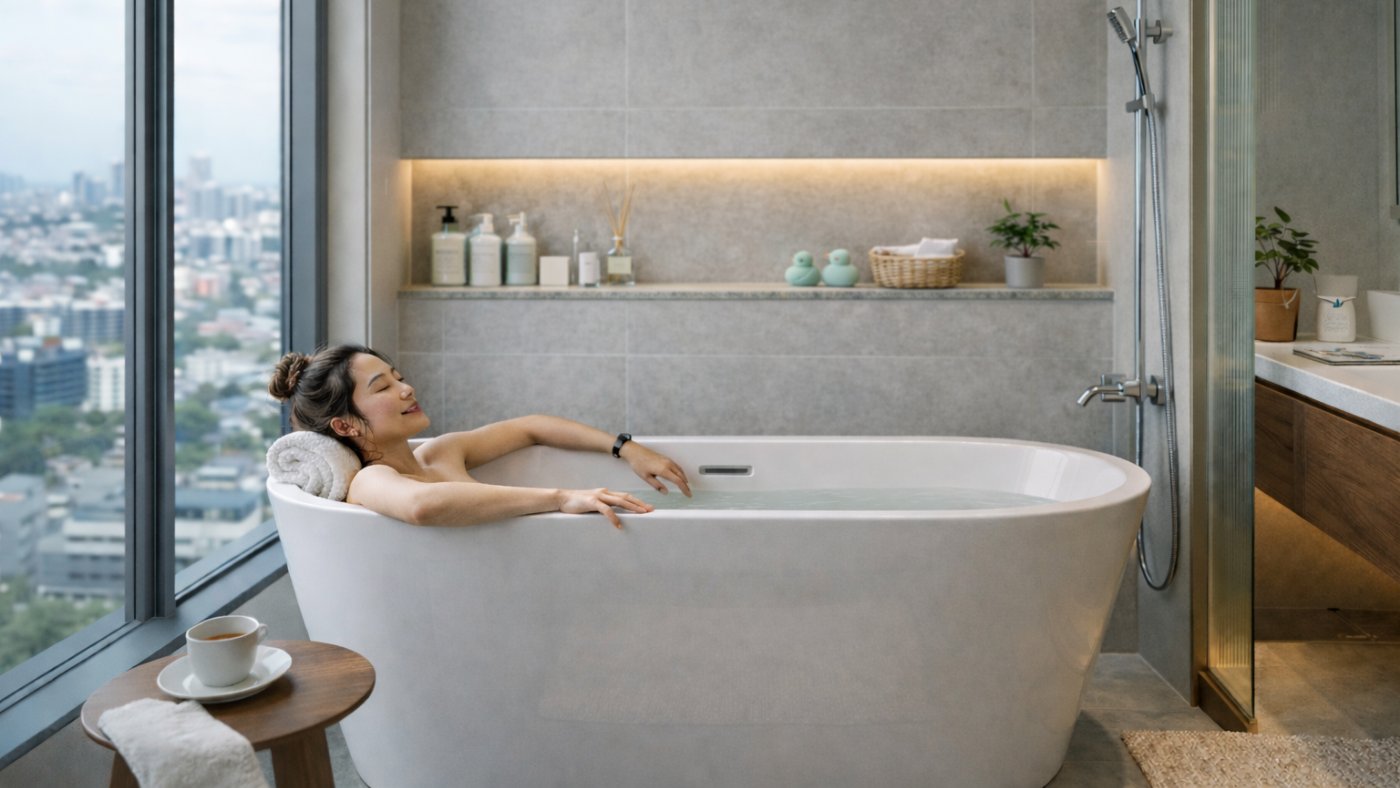
Rather than a big-bang launch, the system came up in stages, with live conversations used as the test bed from early on and reverted or escalated the moment anything looked off.
None of this arrived perfect. The value was in catching and fixing issues fast, usually within the same day they were flagged. A representative sample of what went wrong and what we did about it:
Early on the agents made bookings on closed days (Wednesdays, public holidays, even Christmas Day) and occasionally created duplicate slots.
We introduced explicit closed-day and holiday checks, a standardised date format, a single consolidated booking agent, and the day-of-week rule enforced in both the header and footer of the instructions. We also deliberately did not give the agents the ability to delete calendar events; cancellations are marked rather than erased.
The agents periodically quoted the wrong size, an outdated fee, or claimed they could not find pricing that was in fact available. Most were knowledge-source mismatches, and the showroom team flagged them as they appeared.
We tightened the rules so the agent always serves the full price list, never claims missing information that exists, and copies hours and pricing verbatim. This category never fully closes, and we are honest about that.
A thread that started on a vanity question and later turned to the bundle would sometimes stay with the original specialist instead of re-routing, because the assignment was made early and not re-evaluated.
We added explicit hand-off guardrails (any mention of the bundle triggers an immediate transfer) and removed conflicting self-assignment instructions that caused agents to talk over one another.
At one point appointment volume dipped. Reviewing conversations showed the AI was pushing an AR visualisation tool too early instead of inviting the customer to the showroom first.
We reworked the follow-up to lead with a showroom invitation, ask for a specific day and time, and offer the AR tool only if the customer declined. This is the kind of change that only surfaces from reading real conversations.
The system rode out platform-level incidents (an upstream model-provider outage, and a platform outage that affected several hundred organisations) as well as periodic Instagram token expiries.
Because human takeover was built in from the start, staff could step in whenever the automation was interrupted, and conversations were reassigned back once service returned. The goal is graceful handover when something upstream breaks, not a claim that nothing ever does.
We were spending half our day just qualifying enquiries over WhatsApp. Now the AI filters out the tyre-kickers and only passes us serious leads.Eeling Lew · Founder, Hera Bathroom
The points below are directional, drawn from Hera's own reporting and day-to-day operation rather than a controlled study. They describe the shape of the change, not a precise measurement.
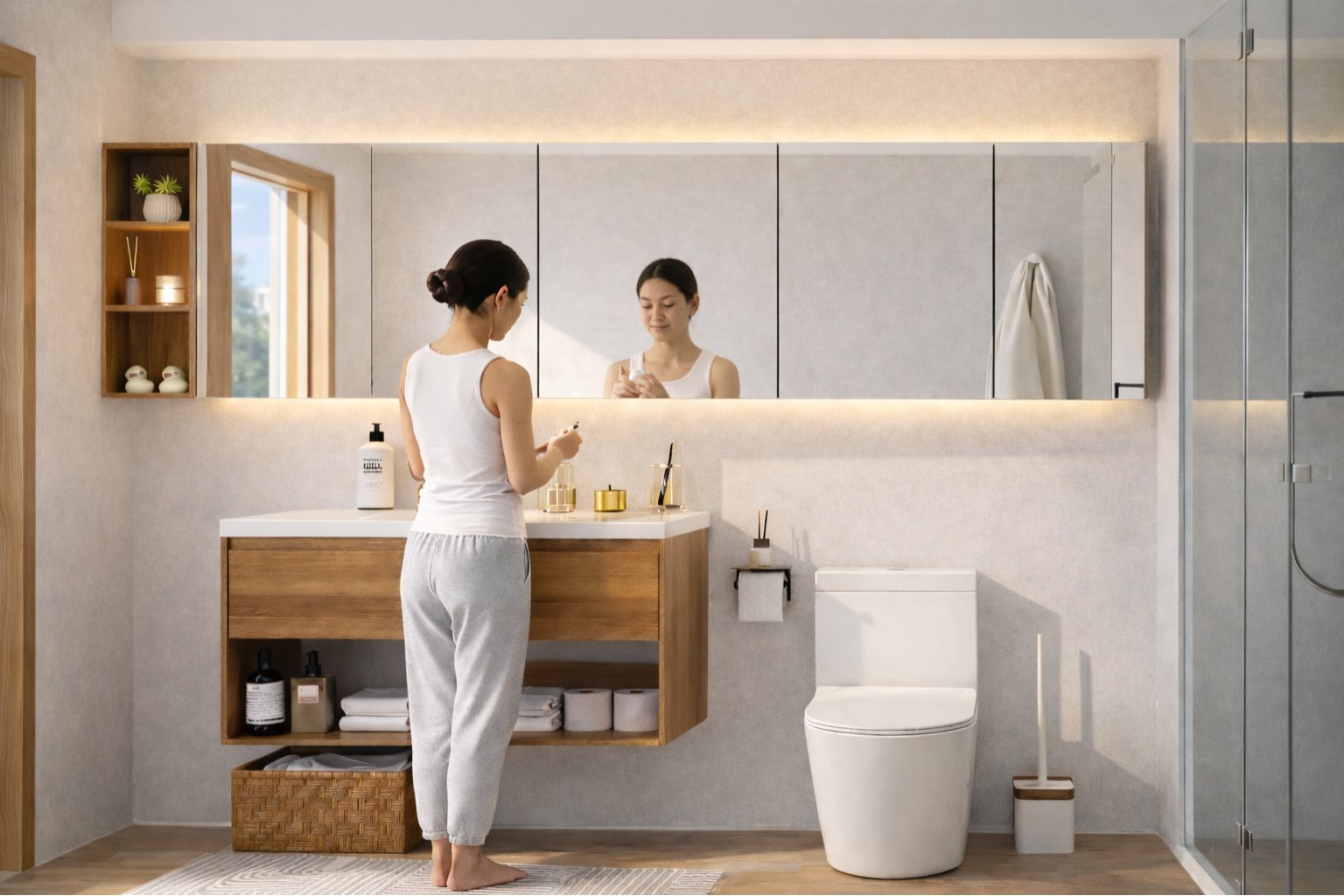
Directional, drawn from Hera's own reporting and day-to-day operation rather than a controlled study. Specific figures relating to revenue, customer or database size have been withheld under our confidentiality commitments.
As trust built, the scope widened to include the work that surrounds the messaging engine. The engagement now also covers:
A surprising amount of the value sits in the connective tissue, most of which is invisible to the customer. Booking flows write through to the team calendar and the CRM with duplicate-contact handling across phone, email and social identities. Floor-plan images sent in chat are stored automatically against the CRM opportunity, knowledge sources stay in sync from the catalogue and sitemap, and scheduled automations run the checks and reminder dispatch that messaging alone could not, including pulling appointments from more than one booking source.
Prepared by Zelix Labs. Outcomes are directional and reflect Hera Bathroom's own reporting over the engagement to date. Specific figures relating to revenue, customer or database size, and other commercially sensitive details have been deliberately withheld under our privacy and confidentiality commitments. Founder quote and this case study published with the permission of Hera Bathroom's owners.
We design the team, train it on your products and tone, deploy it across the channels your customers actually use, and stay on as the operator.